
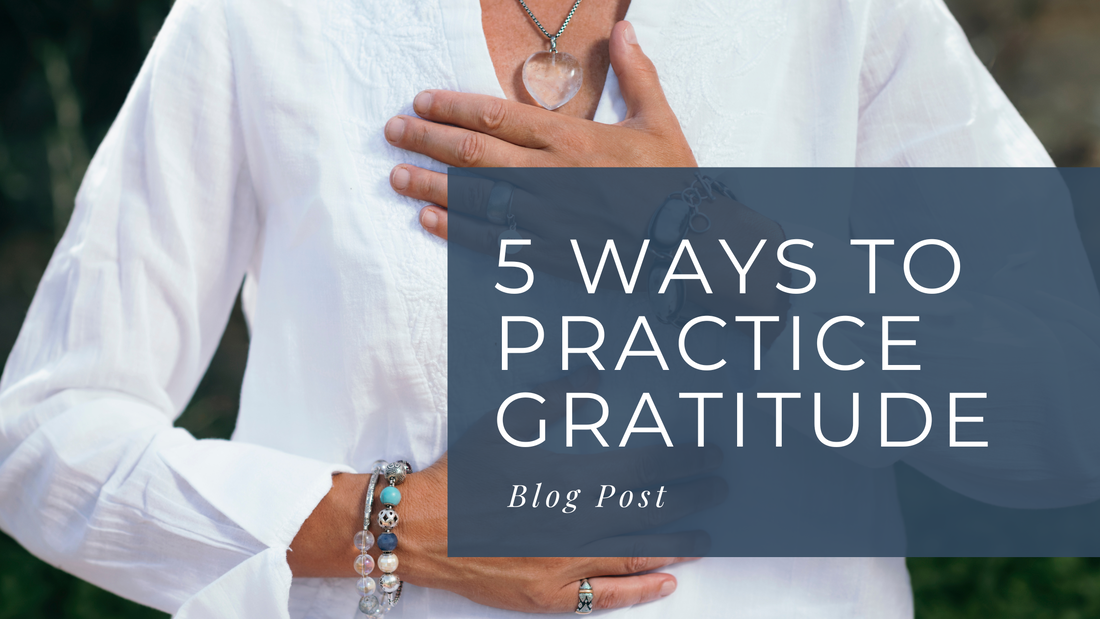
5 Ways to Practice Gratitude
Dr. Erica Volk, ND
Mental health afflictions like anxiety and depression are extremely common. Most of us experience anxiety and depression to some degree over the course of our lifetime (and often more than once). A practice of gratitude is a skill that can help one stay afloat through the challenging times and leads to more joy and satisfaction in life.
How does one become more grateful? Below are five different ways of adopting a more grateful approach to life.
How does one become more grateful? Below are five different ways of adopting a more grateful approach to life.
Gratitude Practice #1: Gratitude Journaling
Gratitude journaling is one of the most common gratitude practices. I recommend choosing a special notebook for the purpose, and maybe even a special pen you really like. Spend a few minutes each day (before bed is nice) writing down three or more things you are grateful for from that day. These can be big things or small things. The point is to recognize what is good in your life. Here are a few examples:
If writing by hand feels like too much work, there are apps you can use to record your gratitude! A couple worth checking out are My Gratitude Journal and Happify.
- I am grateful for clean clothes to wear.
- I am grateful for the support I receive from my friends and family
- I am grateful to the person who let me go ahead of them in line at the grocery store
- I am grateful for my willingness to learn new skills
If writing by hand feels like too much work, there are apps you can use to record your gratitude! A couple worth checking out are My Gratitude Journal and Happify.
|
Hello, health lover! Did you sign up to get your FREE Monthly Dose yet? Optimize your health and stay In the loop with my monthly newsletter that brings you:
|
Gratitude Practice #2: Tune Into Your Senses
A big part of gratitude is noticing all the beauty around you. To practice this, start tuning into your senses: sight, touch, sound, smell, and taste. Not only will tuning into your senses help you notice the beautiful, lovely, delicious, soft, and interesting sights, sounds, tastes, and textures in your life, but it is also a practice in mindfulness. Mindfulness is simply the art of being present in the moment. Since most anxious and sad thoughts are related to the past or to the future, focusing on the present helps reduce these thoughts and helps you cultivate gratitude and peace of mind. A few questions to ask yourself when tuning into the senses:
- What do I see? Are the sights around me pleasing? What is beautiful about the environment around me?
- What sounds do I hear? Which sounds are pleasing? Which ones are displeasing?
- What do I taste? Where did this food come from? How was it grown, transported, and prepared?
- What do I smell? What do the smells remind me of?
- What do I touch? What is supporting my weight? What textures do I feel against my skin, and with my fingers? Where do I feel comfortable and at ease in my body, or can I find some softness there?
Gratitude Practice #3: Find the Silver Lining
Life isn't always rosy, and that's just a fact! Gratitude is recognizing the silver lining in difficult circumstances. When you're feeling low or when things don't go your way, there is usually some good that comes from the experience, even if it's just the fact that you gained a valuable lesson, or showed your resilience. For example, being fired from a job could mean an opportunity for a much-needed change, or the chance to grow and develop new skills. Grieving the loss of a loved one means that you cared greatly for someone, and this is a beautiful thing. Practice looking for the silver lining, and this will help you to become more grateful, and more joyful.
Gratitude Practice #4: Volunteer
One way to be grateful for our life and circumstances is to spend time giving back to those who are less fortunate, or who have more challenges than we do. Volunteering can be a regular activity or done once in a while at events of your choosing. People often choose volunteer activities that are close to their hearts and personal experiences. For example, if you have lost a loved one to a particular disease, it may feel good to volunteer in a group that holds walks or fundraising events for research relating to that disease. Or if you struggle with finances, it may feel good to volunteer with the homeless or low income people, which may help you to recognize your relative abundance. There are hundreds (more like thousands) of volunteer opportunities out there, and organizations that are trying to make a difference are grateful to you and your support in their cause, which, in turn, leads to a sense of well-being and purpose in life.
Gratitude Practice #5: Remember the Bad Times
When life is bleak, it is helpful to remember the times when your challenges were even greater, or when your depression or anxiety were at their worst. Noticing how far you've come and recognizing your personal growth, transformation, and resilience in the face of adversity will help you to become more grateful for your circumstances and life now. Remembering difficult times also helps support your belief in your ability to persevere and rise to the challenges! These reminders are often important, especially when we have spiralled into a pit of worry or despair. When you can recall times when circumstances were worse, you can be certain that you will get through your current challenge!
Sometimes anxiety and depression are severe, and even these simple steps can be difficult to put into practice. If you are really struggling, please reach out. It may be the case that additional support is needed before you will be able to begin to make the incremental changes that will help your mind and spirit to heal. Many therapies can help, especially for the "super-stuck."
Please don't hesitate to connect with me. Your mind and heart are worth it. Learn more about working with me and my approach. You can also schedule an appointment online or phone the clinic to inquire about scheduling an appointment.
**It can be difficult to find a doctor in BC. If you're looking for a primary care doctor in BC who is accepting new patients, I can help. Appointments are available in-person in Kelowna or through online consult from anywhere in BC.
Please don't hesitate to connect with me. Your mind and heart are worth it. Learn more about working with me and my approach. You can also schedule an appointment online or phone the clinic to inquire about scheduling an appointment.
**It can be difficult to find a doctor in BC. If you're looking for a primary care doctor in BC who is accepting new patients, I can help. Appointments are available in-person in Kelowna or through online consult from anywhere in BC.